Structural Ecologies:
Forests, Forces, Frameworks
Reinvisioning architectural design through a structure-first approach
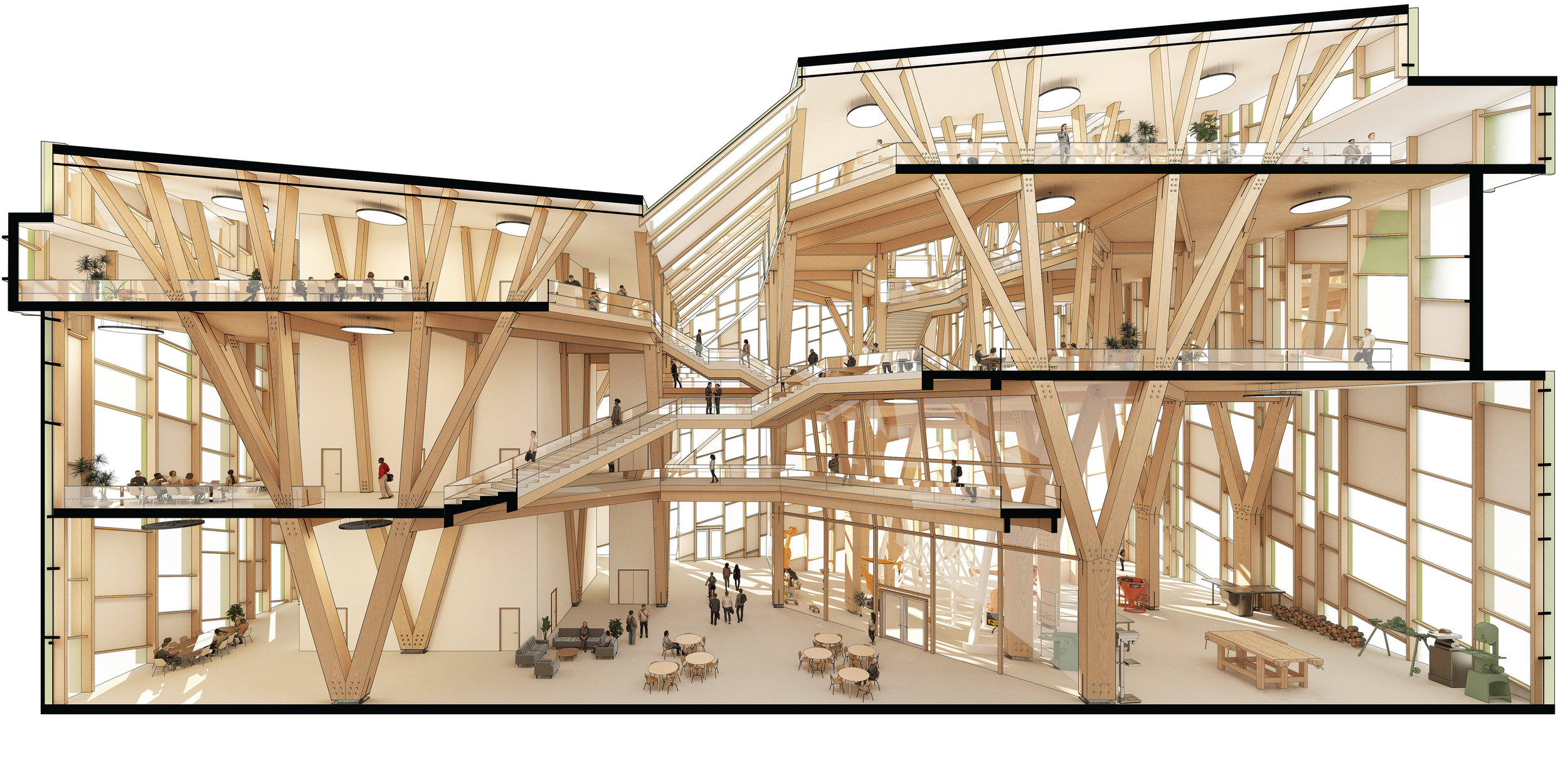
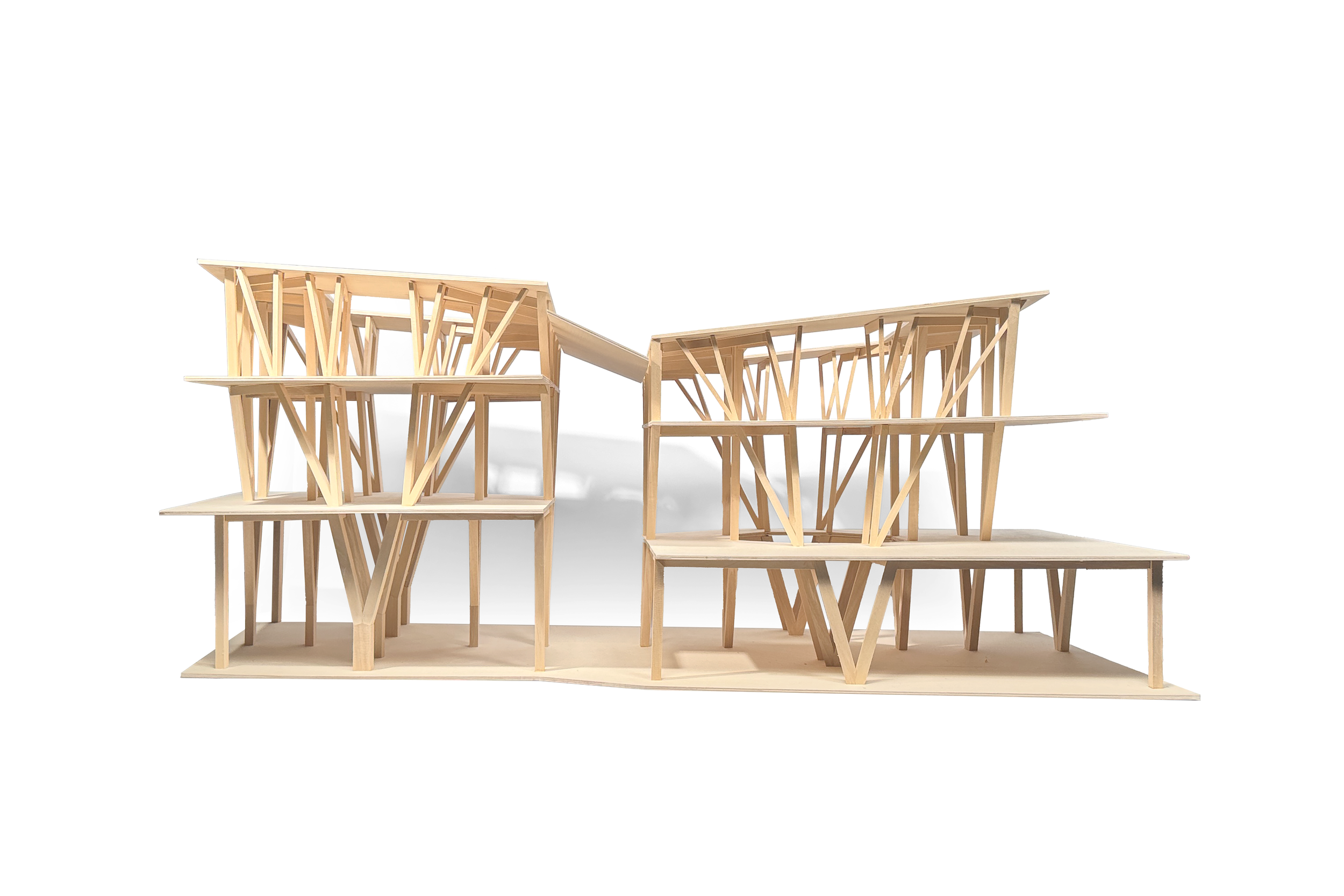
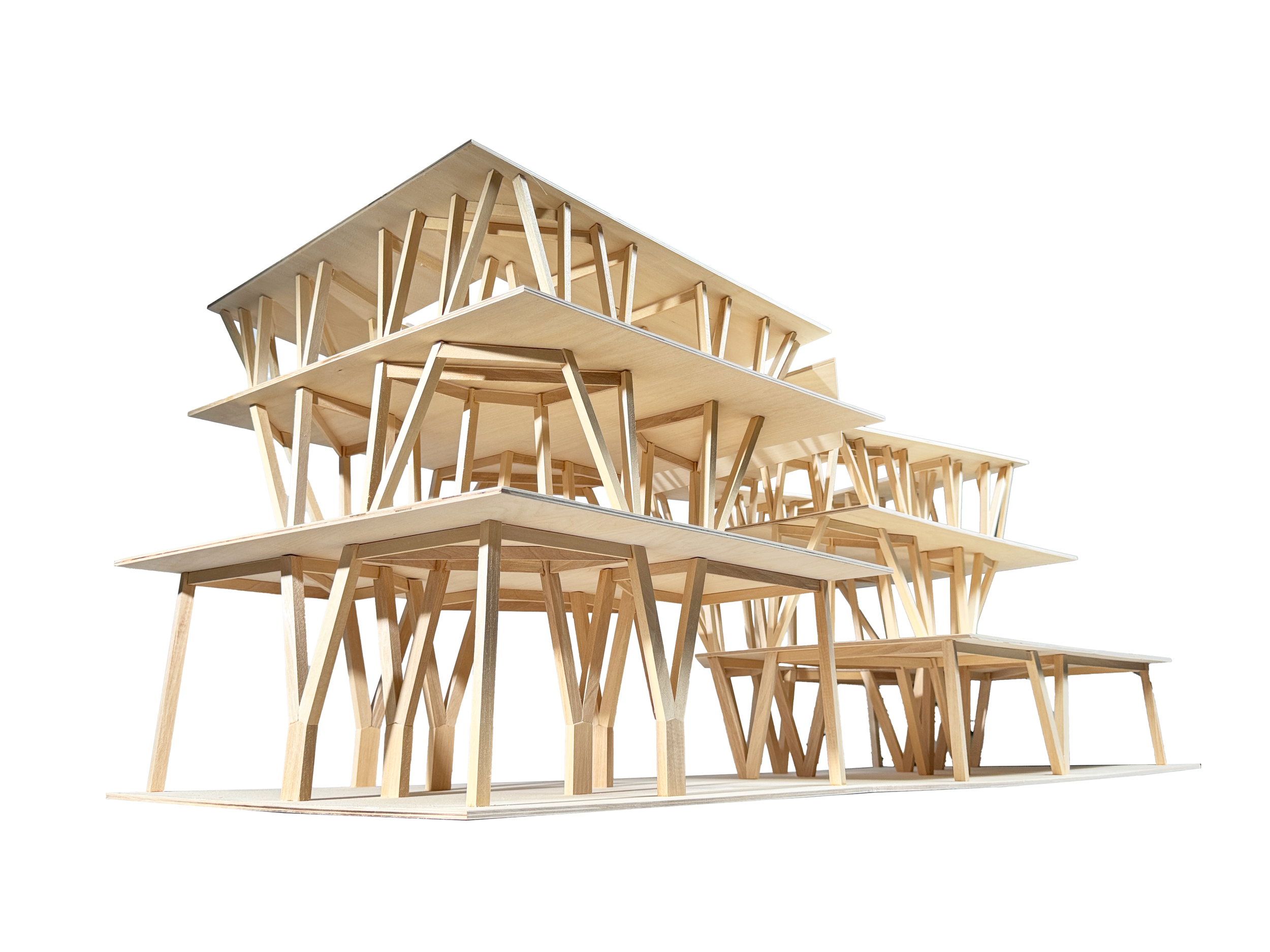
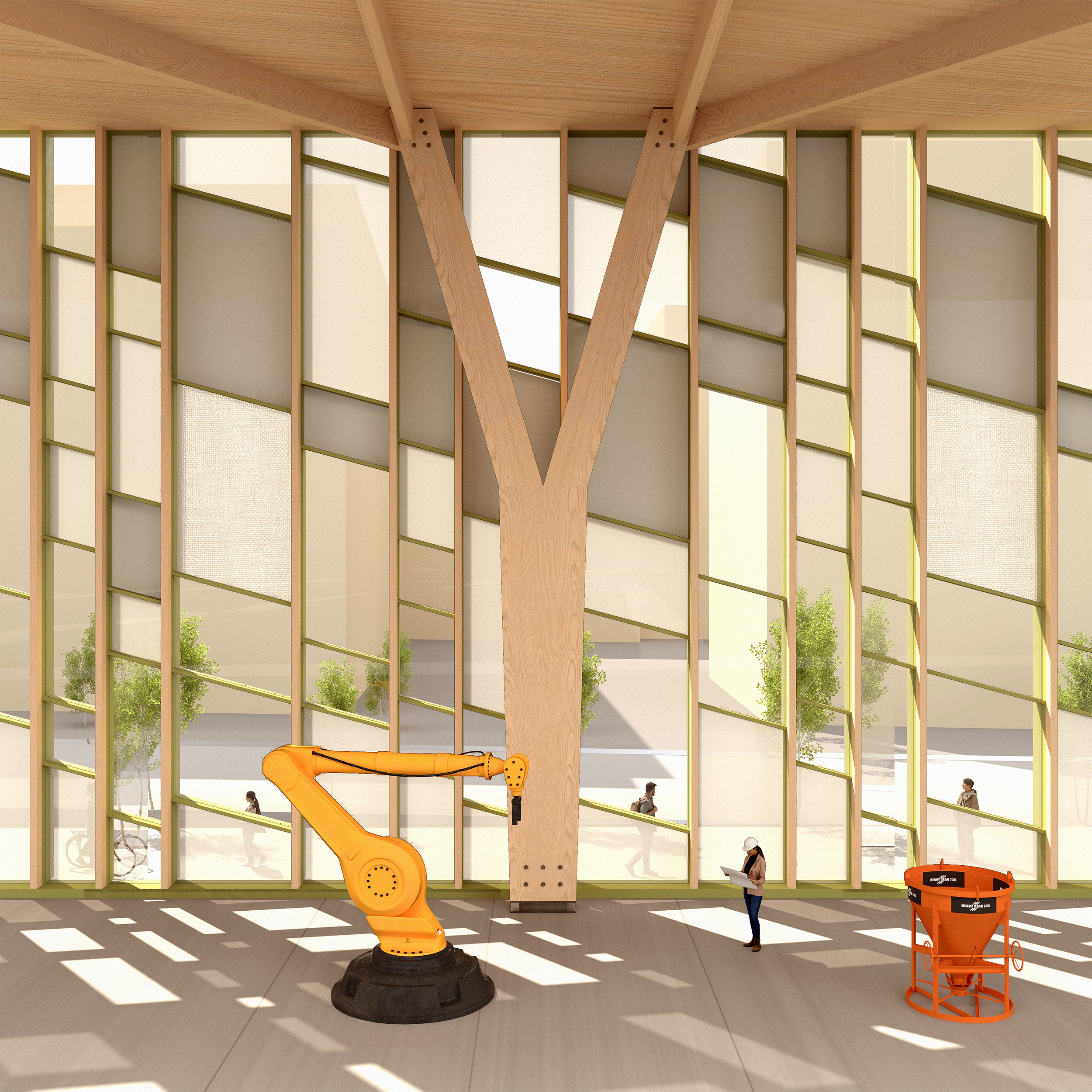
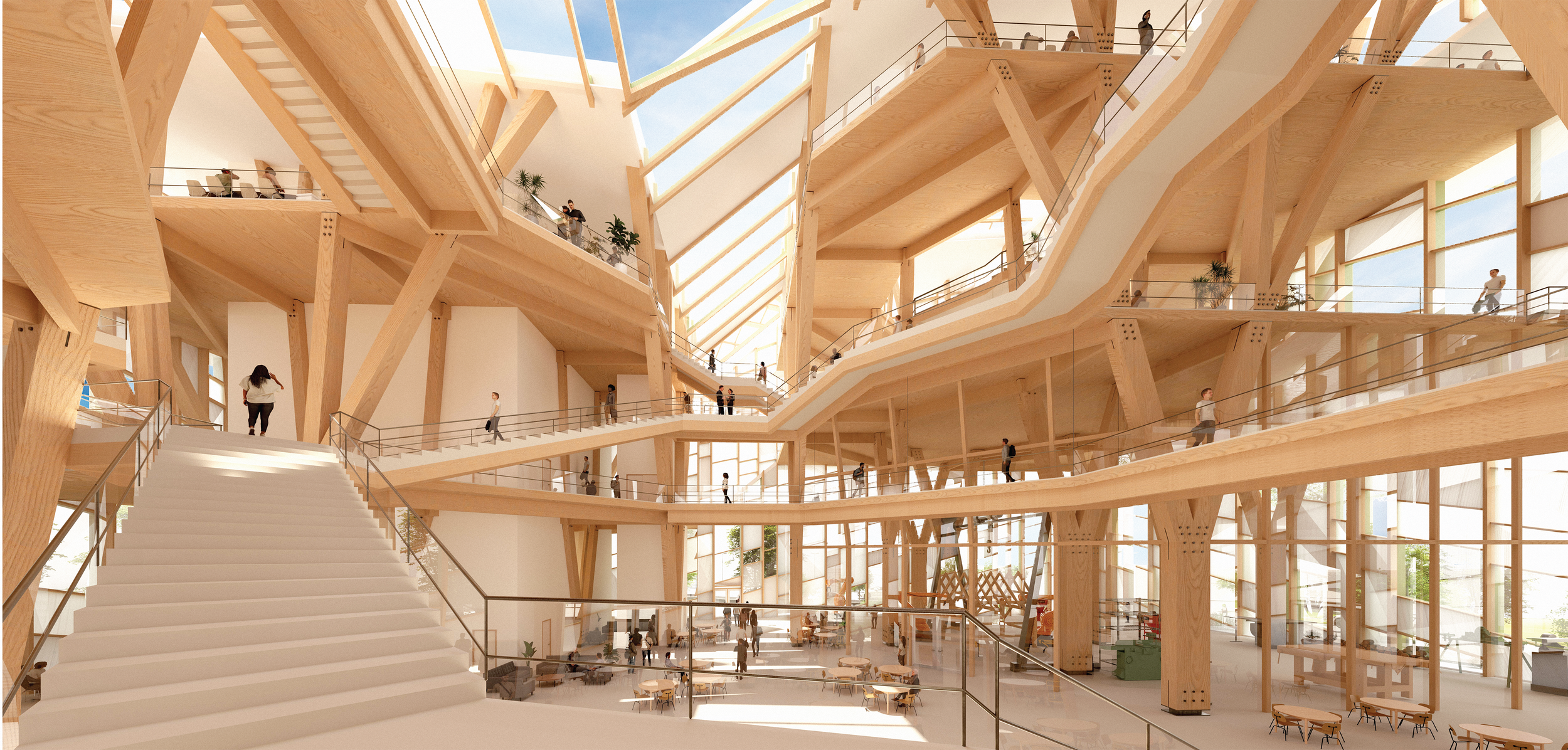
This project investigates the architectural potential of computationally optimized, tree-like structural systems within the program of an engineered timber research center. The design seeks to evoke the experience of “walking into a forest,” reconnecting researchers with the broader environmental and material motivations underpinning work in timber construction and sustainability.
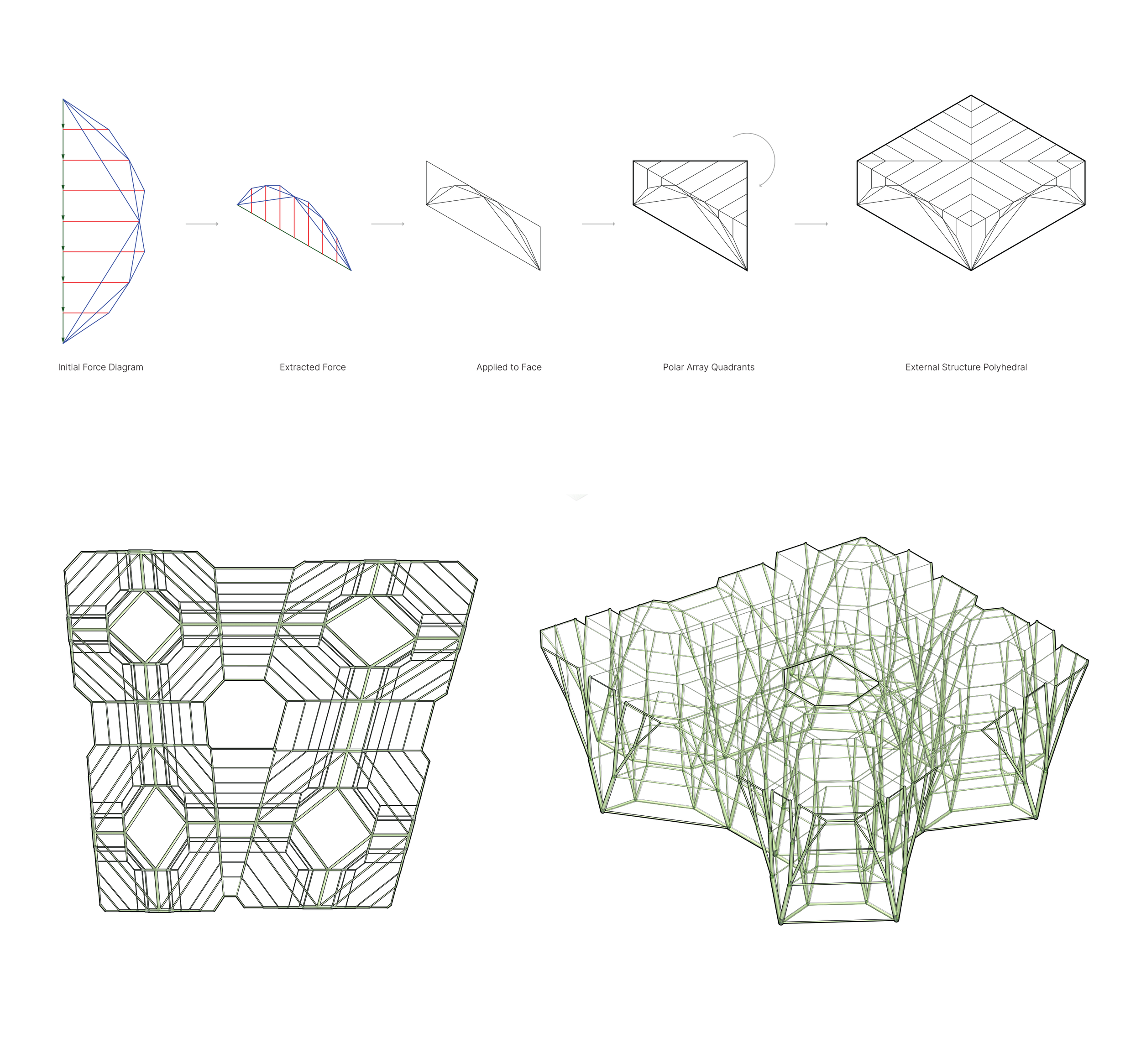
The building’s structure served as the primary design driver and was developed using PolyFrame2, a computational structural design tool created by COMPAS and native to Grasshopper. Structural logic informed both spatial organization and architectural expression, positioning the timber system as an active generator of form rather than a secondary technical layer.

The program accommodates a wide range of research environments, including fabrication shops, wet labs, robotics rooms, flexible research spaces, and conventional offices. Community-oriented spaces such as a central café within the atrium, a gallery, and an auditorium are interwoven throughout the building, extending to publicly accessible green space surrounding the site.
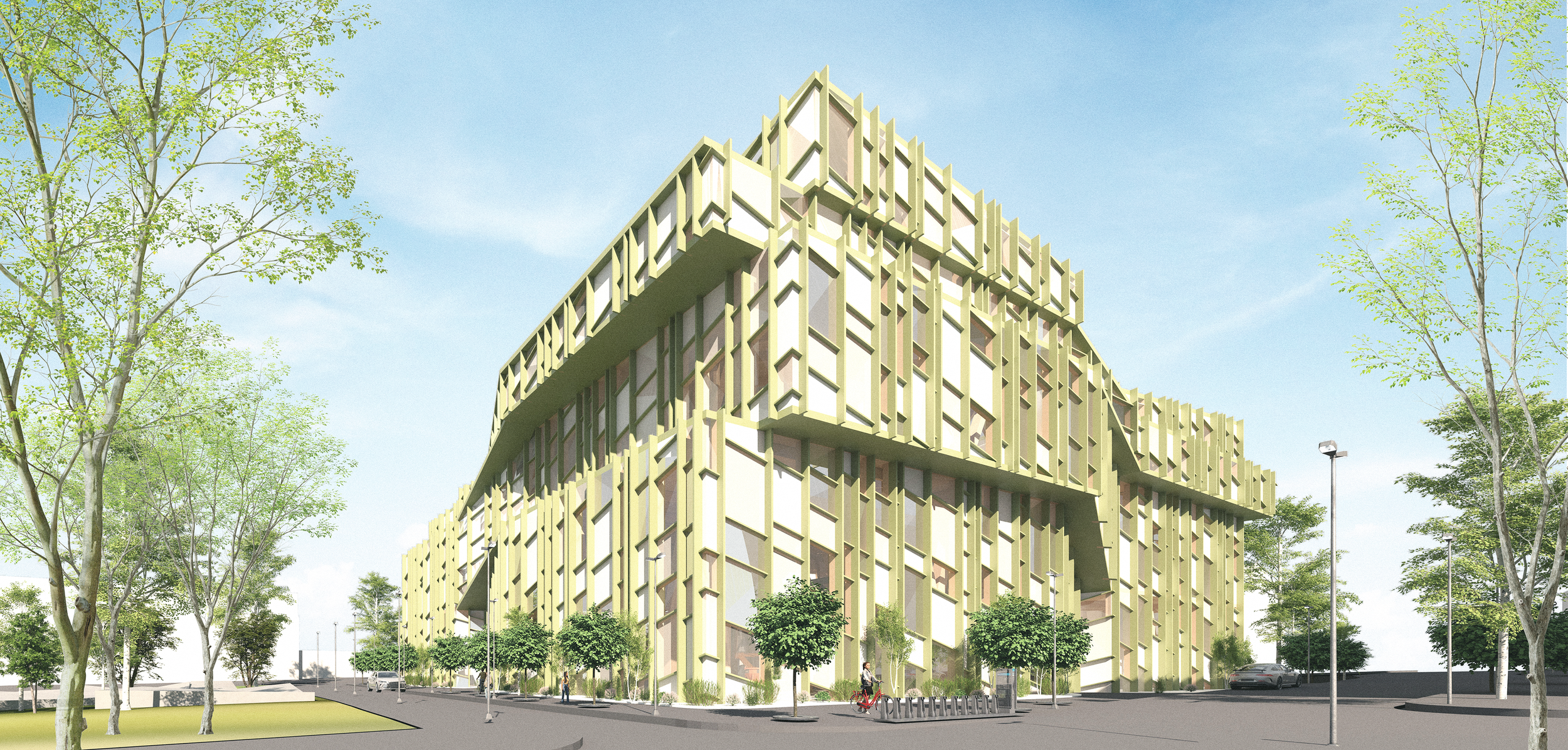
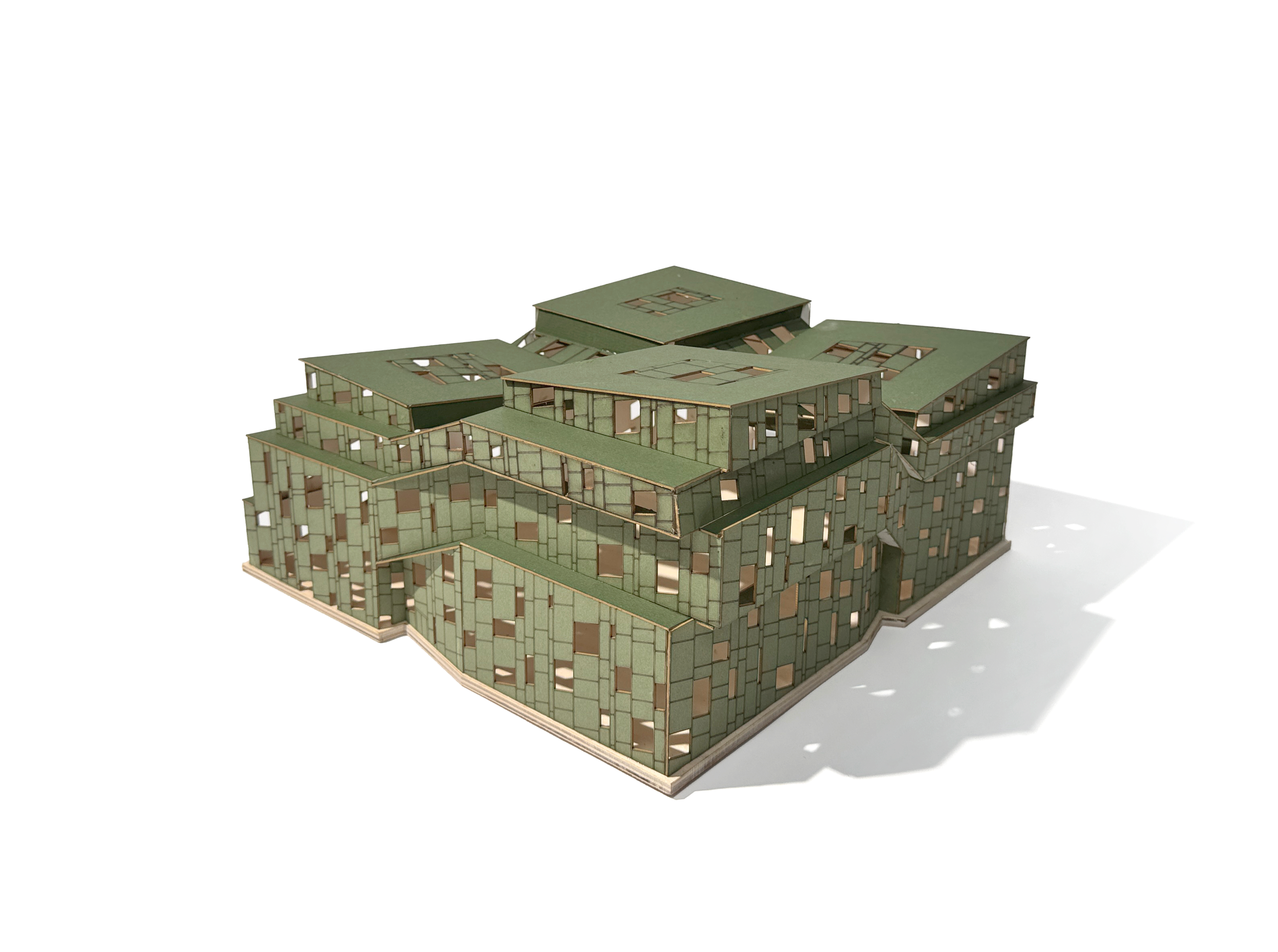
The building massing responds directly to pedestrian and vehicular movement patterns, as well as internal programmatic adjacencies and circulation. The façade reinforces the forest metaphor by filtering daylight through variably opaque panels, producing dappled light conditions that animate the interior spaces.
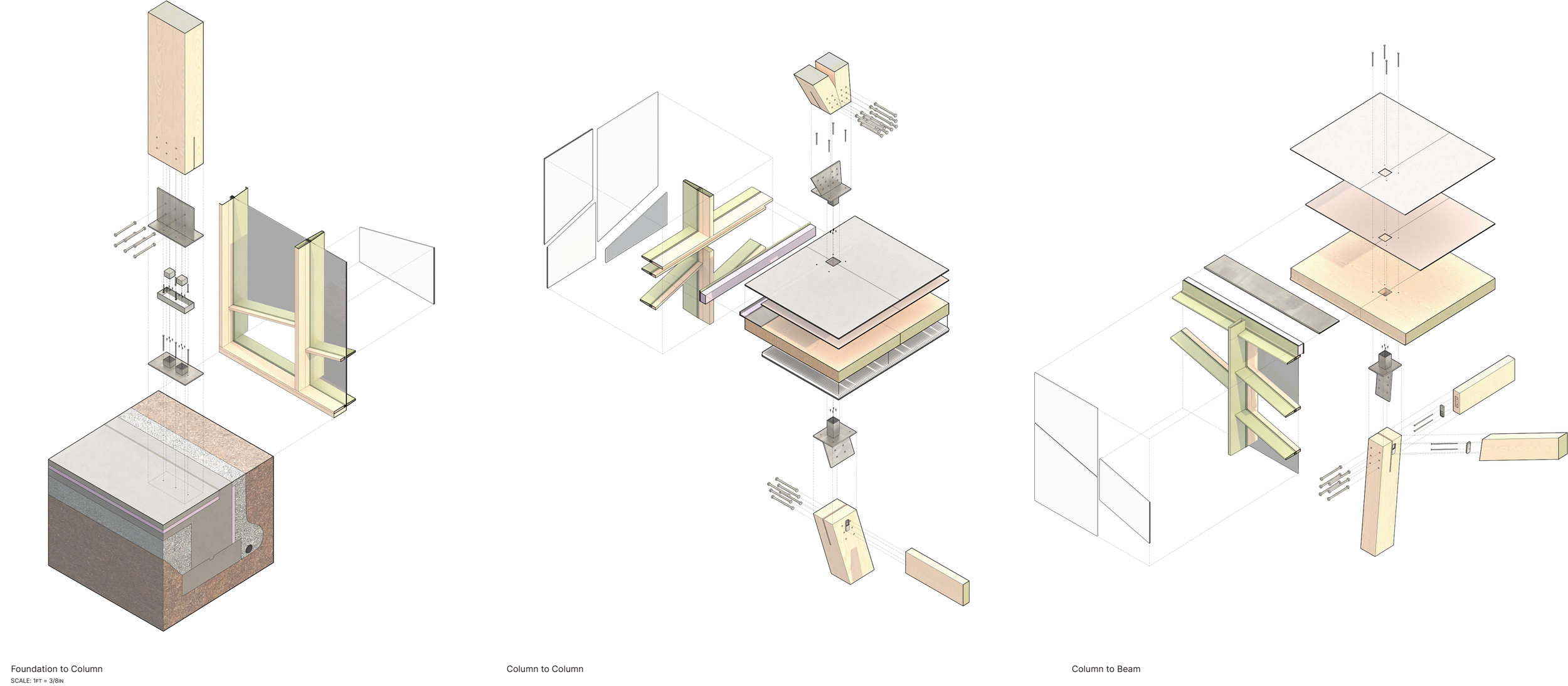
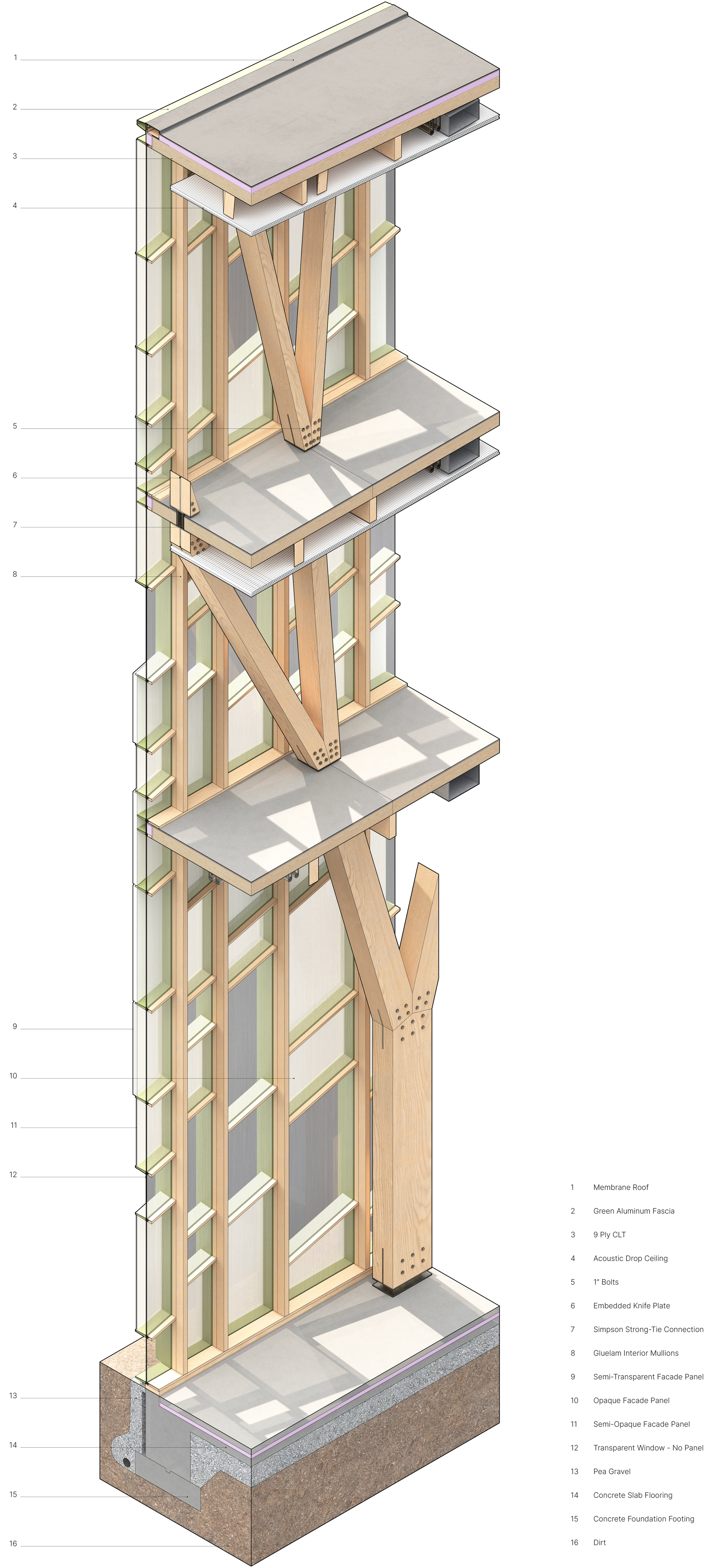
Particular emphasis was placed on resolving construction sequencing and detailing. By developing feasible construction strategies for complex timber structural systems, the project argues for their broader adoption, positioning constructability as a critical pathway toward meaningful carbon reduction and environmental impact.